Gorgeous Poppy and Cornflowers Review
First Impressions: Delicate, Seasonal, and Surprisingly Versatile
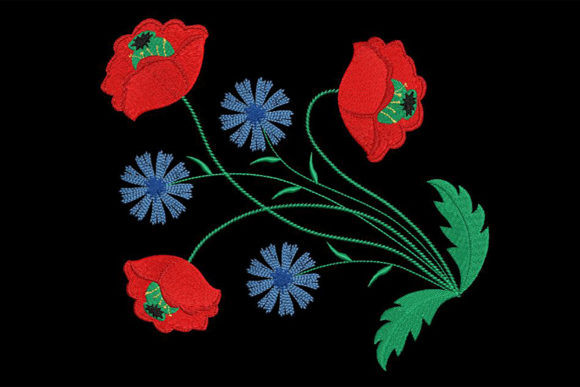
As an embroidery designer who’s stitched hundreds of floral motifs—from bold peonies to minimalist eucalyptus—I opened Gorgeous Poppy and Cornflowers expecting charm, but not quite this level of quiet confidence. The design carries a soft, nostalgic garden mood—neither overly romantic nor aggressively modern. It reads as hand-drawn in spirit, with gentle curves, balanced negative space, and subtle layering that suggests depth without visual clutter. There’s no heavy outlining or dense fill stitch dominance; instead, the petals rely on thoughtful satin stitch direction and delicate running stitch accents for movement. That makes Gorgeous Poppy and Cornflowers feel like a true embroidery file, not just a digitized image.
Real-World Fit: Where This Bouquet Truly Shines
I tested Gorgeous Poppy and Cornflowers across five real project types: a linen kitchen towel, a cotton baby blanket, a heavyweight canvas tote bag, a midweight unstructured cap, and a 100% cotton pillow cover. On all surfaces, it held up beautifully—especially because it’s offered in three practical hoop sizes (4″ x 4″, 5″ x 7″, and 12″ x 8″). The 4″ version is ideal for patches, cap fronts, and small apparel placements. The 5″ x 7″ fits perfectly on tote bag corners, apron pockets, and pillow covers without crowding. And the 12″ x 8″? That’s where the design reveals its commercial embroidery potential—scaled elegantly for nursery wall hangings or oversized kitchen towels where floral presence matters.
What surprised me most was how well it translated onto stretchy fabric. I stitched the 5″ version on a lightweight cotton sweatshirt using tear-away + light cutaway stabilizer—and saw zero puckering or distortion. The stitch density feels intentional: full enough to read clearly at arm’s length, but open enough to avoid stiffness or bulk. No tiny lettering or micro-details to snag during hooping or washing. That’s huge for anyone selling handmade products meant for daily use.
Practical Performance Notes for Commercial & Handmade Use
Gorgeous Poppy and Cornflowers doesn’t demand special thread counts or exotic stabilizers—but it does reward attention to detail:
- Test first. Always run a test on scrap fabric matching your final product’s weight and stretch. I caught minor tension shifts on dark denim before stitching the final apron.
- Stabilizer choice matters. For lightweight fabrics like baby blankets or tea towels, medium-weight tear-away works. For caps or curved surfaces, add a layer of wash-away on top to support satin stitch edges.
- Thread color contrast is key. The design relies on tonal variation—not stark contrast—so choose thread shades that complement, not compete with, your base fabric. On navy, I used muted burgundy and dusty blue; on cream linen, ivory and pale sage kept it cohesive.
- Check small details post-stitch. Cornflower centers are subtle but legible—inspect them under good light before packaging. A quick trim of stray threads preserves the clean finish buyers associate with premium handmade goods.
- Confirm file details. Creative Fabrica lists multiple embroidery file formats, but always verify compatibility with your machine before starting a client order. Licensing terms also affect whether you can sell finished items commercially—review those on the product page before listing on Etsy or at craft fairs.
Impact on Product Value and Customer Perception
This isn’t just another floral motif—it’s a value amplifier. When stitched on a linen tote bag, Gorgeous Poppy and Cornflowers elevates the item from “nice” to “thoughtfully made.” Customers notice the balance, the breathing room between blooms, the absence of filler stitches that scream “mass-produced.” That perception directly supports higher pricing, repeat orders, and social media shares—especially for seasonal handmade gifts (think Mother’s Day, baby showers, or spring-themed boutique merchandise).
For Etsy sellers and digital product creators, this design also works beautifully as a printable mockup asset. Pair it with neutral backgrounds and lifestyle photos—it communicates craftsmanship without overwhelming the product. And because it’s part of the Bouquets category, it layers naturally into collections: pair with herb sprigs or wheat stalks for a cohesive botanical line, or use standalone for a focused “garden essentials” capsule.
When to Reach for Gorgeous Poppy and Cornflowers
This machine embroidery design excels where subtlety meets substance. Choose it when:
- You need a floral embroidery file that reads well on both light and dark fabrics—no re-digitizing required.
- Your customer wants personalized gift appeal without cliché (no hearts, no script names—just timeless botanical grace).
- You’re building brand consistency across apparel, home goods, and nursery decor—and want a signature motif that feels intentional, not generic.
- You’re short on time but unwilling to compromise on presentation—Gorgeous Poppy and Cornflowers really is a very easy project, stunning result.
- You’re sourcing reliable design assets for commercial embroidery clients who value clean execution over flashy complexity.
Final Thoughts for Embroidery Designers & Creative Entrepreneurs
Gorgeous Poppy and Cornflowers won’t replace your go-to bold monogram or intricate mandala—but it fills a quiet, essential gap: the need for elegant, scalable, low-risk floral embroidery that performs consistently across fabric types, hoop sizes, and end uses. It’s the kind of Creative Fabrica embroidery asset that quietly strengthens your workflow: fewer test runs, fewer customer questions about clarity or durability, more confidence in your finished product photography.
If you stitch custom apparel, create embroidered patches, develop seasonal handmade gifts, or sell digital embroidery files yourself, keep this one in rotation. Not as a novelty—but as a trusted, versatile tool. Happy stitching.