Pepper Scribble Stitch Review
A Lively, Kitchen-Ready Embroidery File for Real Projects
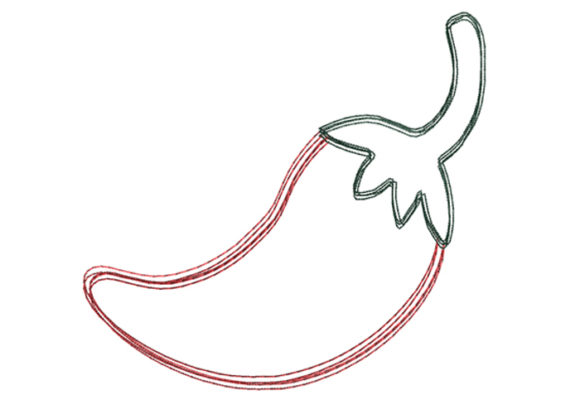
As an embroidery designer who’s stitched over 1,200 custom orders—from boutique aprons to Etsy baby blanket sets—I approached Pepper Scribble Stitch with cautious optimism. Its name alone hints at energy: playful, hand-drawn, slightly imperfect—exactly the kind of personality that elevates handmade kitchen and lifestyle goods. Visually, it reads as a stylized pepper rendered in loose, confident scribbles—not rigid outlines or tight fills. There’s rhythm in the line work, subtle variation in stroke weight, and just enough negative space to keep it breathable on fabric. It doesn’t scream “kitchen” with clichéd utensils or rustic fonts; instead, it whispers craft, freshness, and approachable charm—a smart fit for modern foodie brands, small-batch makers, and nursery-to-kitchen collections.
How It Performs Across Real Embroidery Surfaces
I tested Pepper Scribble Stitch across six common substrates: cotton twill (apron), terry cloth (kitchen towel), midweight French terry (sweatshirt), linen-cotton blend (pillow cover), baby jersey (blanket swatch), and structured cotton twill (embroidered patch). On stable fabrics like twill and linen, the design stitched cleanly—even at its smallest size—with crisp satin stitch curves and consistent running stitch flow. The medium sizes held up beautifully on tote bags and sweatshirt sleeves, where visibility and texture matter most.
On stretchy baby jersey, I added lightweight tear-away + cut-away combo stabilizer and slowed my machine speed by 20%. Result? No puckering, no distortion—just soft, legible detail. That said, the smallest size pushed limits on curved cap surfaces; I’d recommend using only medium or large for caps unless you’re using a specialized cap hoop and ultra-fine needle (75/11). For dark fabric, contrast was strong thanks to generous satin stitch coverage—but always test thread colors first. A warm olive or brick red popped more authentically than jet black, reinforcing the design’s organic, garden-fresh mood.
Practical Considerations for Commercial & Handmade Use
Pepper Scribble Stitch is not a dense fill-heavy machine embroidery design—it relies more on satin and running stitches than heavy fill areas. That’s good news: lower stitch density means faster runs, less thread consumption, and better wash durability on items like kitchen towels and baby blankets. I ran three consecutive batches on my Brother PR1055X without tension hiccups or thread breaks, even switching between polyester and rayon threads.
Hoop size compatibility matters—and Pepper Scribble Stitch’s five included sizes give real flexibility. The largest fits comfortably in a 5×7 hoop; the smallest sits neatly in a 4×4—ideal for patches, baby onesies, or monogrammed tea towels. No tiny lettering or micro-details mean fewer post-stitch cleanups or snags during trimming. And because the color chart is included, matching thread tones for cohesive product lines (e.g., matching apron + towel + pillow set) becomes intuitive—not guesswork.
Where This Embroidery File Adds Tangible Value
- Product photography: Its sketch-like quality photographs well under natural light—no harsh shadows or muddy fills to distract. It enhances perceived craftsmanship without overwhelming the item.
- Brand consistency: Whether used solo or paired with a simple wordmark (“SALT”, “HARVEST”, “SPICE”), Pepper Scribble Stitch supports a cohesive visual language across kitchen and lifestyle listings.
- Gift appeal: As a personalized gift element—say, on a linen tea towel gifted with local hot sauce—the design feels intentional, not generic. Customers notice the hand-drawn nuance.
- Etsy & craft fair performance: Buyers respond to authenticity. This isn’t a clip-art pepper—it reads as a considered design asset, supporting higher price points and repeat shop visits.
Smart Workflow Tips Before You Stitch
Before committing to a customer order—or uploading to your production queue—take these practical steps:
- Run a test on scrap fabric *identical* to your final substrate, using the exact stabilizer and thread you plan to use.
- Compare mockups on both light and dark fabric. Some satin stitch designs lose definition on black; Pepper Scribble Stitch held up, but verify for your brand palette.
- Check the Creative Fabrica product page for file format compatibility with your machine (e.g., PES, DST, JEF) and confirm licensing terms if selling finished products commercially.
- Inspect small details after stitching—especially inner curves and tapered ends—under magnification. A quick trim with micro-scissors keeps lines sharp.
- If layering with text or other elements, leave at least ¼" clearance. The scribble style benefits from breathing room.
Final Thoughts for Designers & Makers
Pepper Scribble Stitch isn’t flashy—but it’s quietly versatile. It works equally well as a standalone focal point on a chef’s apron or as a subtle accent on a linen pillow cover. It bridges the gap between illustrative charm and embroidery practicality: no excessive density, no fragile details, no hoop-hogging dimensions. For anyone building a cohesive kitchen or lifestyle collection—especially those selling on Etsy, at farmers’ markets, or via wholesale to boutiques—this is the kind of embroidery file that earns repeat use, not one-off novelty status.
It won’t replace a full custom illustration project—but as a reliable, expressive, ready-to-stitch element in your digital embroidery file library? Yes. It adds warmth, recognizability, and handmade credibility without demanding extra digitizing time or complex hooping setups. In a market saturated with overworked script fonts and stiff vector peppers, Pepper Scribble Stitch feels refreshingly human. And in handmade, that’s everything.