Sports Balls: A Designer’s Real-World Embroidery Review
First Impressions: Playful, Clean, and Instantly Recognizable
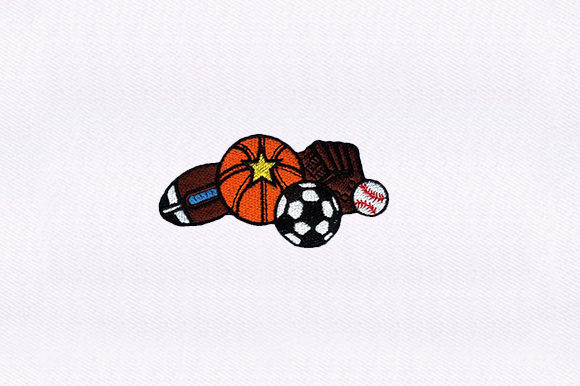
When I opened the Sports Balls embroidery file, my immediate thought wasn’t “cute” or “trendy”—it was “usable.” That’s rare. The design features a balanced cluster of stylized balls—soccer, basketball, baseball, and tennis—with subtle contour lines and gentle spacing. No overcrowding. No awkward overlaps. Just confident, friendly shapes that read clearly at 3–4 inches wide. It doesn’t shout. It invites. And that makes it ideal for real projects—not just digital previews.
Real-Life Test: A Custom Embroidered Tote for a Local Youth League
Last week, I stitched Sports Balls onto a natural canvas tote for a community sports camp giveaway. We used medium-weight cutaway stabilizer, 40-weight polyester thread, and a 5" × 7" hoop. The result? Crisp satin stitch outlines on each ball, smooth fill stitch interiors with no puckering, and consistent density across all four elements. Parents loved how legible it stayed—even from across the gym floor. Kids pointed and named them. That kind of instant recognition matters more than perfect symmetry when you’re making handmade products for real people.
Where Sports Balls Shines (and Where It Needs Care)
Sports Balls works beautifully on:
- Custom apparel — especially crewneck sweatshirts and relaxed-fit tees where the design sits cleanly over the chest or sleeve cuff.
- Tote bag design — its centered layout and moderate scale fills space without overwhelming the fabric.
- Baby embroidery — on onesies or burp cloths, it reads as sweet and active, not aggressive or overly athletic.
- Embroidered patch — clean edges and defined shapes mean it’ll hold up well when heat-applied or sewn on.
- Holiday embroidery — think stocking stuffers for young athletes or graduation gifts for high school seniors.
But here’s where attention is needed:
- Small hoop sizes: Don’t force it into a 3" × 3" hoop unless you’re willing to simplify or resize manually—the detail in the stitching lines starts to blur below 2.5".
- Textured fabrics: On heavy terry cloth or bouclé, reduce stitch density slightly or add a tear-away topper to keep the satin stitch smooth.
- Stretchy fabric: Always pair with cutaway + lightweight tear-away combo—and baste first. The curves in the balls can distort if the base shifts mid-stitch.
- Dark fabric: Test thread colors carefully. Light grays or heathers work better than stark white on navy or black—less haloing, more depth.
- Curved surfaces: It’s doable on caps, but avoid the very front curve. Center it on the flat panel above the bill instead.
Design Integrity Meets Customer Trust
As an Etsy seller and craft business owner, I’ve learned that customers don’t buy embroidery files—they buy confidence. Confidence that the finished product will look professional, hold up to washing, and reflect well on their brand or gift-giving taste. Sports Balls delivers that quietly. Its balanced proportions mean it won’t tip or lean on uneven fabric. Its open negative space prevents dense buildup that cracks after laundering. And because it avoids tiny lettering or micro-details, it scales reliably—from 3" patches to 6" pillow covers—without re-digitizing.
What This Means for Your Handmade Product Line
If you sell personalized gifts or boutique merchandise, Sports Balls is low-risk, high-return design assets. It pairs effortlessly with neutral apparel—cream sweatshirts, charcoal totes, oatmeal tea towels—and adds just enough personality to stand out in a crowded Etsy search. For small shop owners, it’s also a smart cross-category piece: use it on baby blankets for nursery decor, on aprons for coaching clinics, or on kitchen towels for sporty holiday bundles. The theme feels inclusive—not tied to one league or gender—and that broadens your buyer pool.
Practical Embroidery Designer Notes You Can’t Skip
Before stitching Sports Balls on your next project, do these six things:
- Test on scrap fabric—especially if you’re using something new like brushed poly or linen-cotton blend.
- Check thread color contrast on both light and dark backgrounds. What looks vibrant on screen may mute on fabric.
- Review stitch density. If your machine hesitates or the fabric puckers, reduce fill stitch density by 5–10%—not the outline.
- Confirm hoop size compatibility. If your machine only supports 4" hoops, verify whether resizing affects clarity before committing to production.
- Inspect small details—like the seam lines on the basketball or the netting hint on the tennis ball—under magnification. They should resolve cleanly, not blur into blobs.
- Verify licensing. Since this is a machine embroidery design intended for commercial embroidery and finished product resale, confirm whether the license permits use in your craft business, Etsy listings, or printable mockups.
Final Thought: It’s Not Just About Balls—It’s About Belonging
Sports Balls isn’t flashy. It doesn’t try to be clever or ironic. It’s simply well-built, respectful of fabric and machine limits, and emotionally warm. That’s why it lands so well on a child’s backpack, a coach’s cap, or a boutique’s limited-run sweatshirt drop. In a market full of overdesigned, under-tested embroidery files, Sports Balls stands out by doing exactly what it promises—without fanfare, and without failure. For designers, sellers, and makers who value quiet reliability over loud trends, it’s a keeper.