Green Dessert Donut: A Sweet, Stitch-Ready Design Worth Your Thread
First Impressions: Playful, Polished, and Purpose-Built
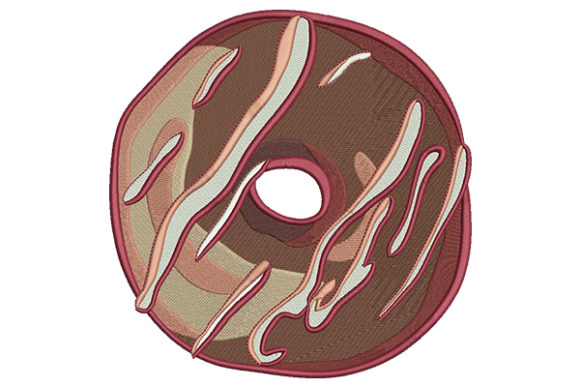
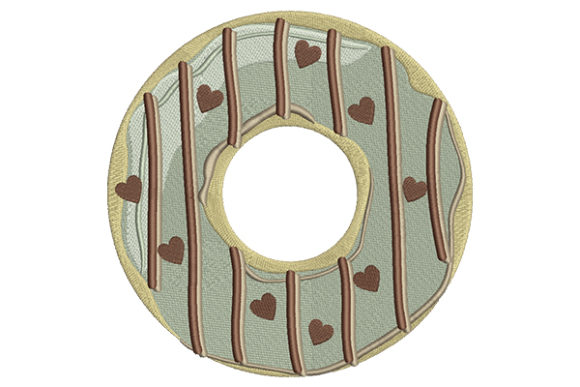
When I opened the Green Dessert Donut embroidery file, what struck me wasn’t just the color—but the confidence in its shape. It’s round, generous, and balanced, with a subtle sheen implied by satin stitch contours and a soft fill that avoids looking flat or pixelated. This isn’t a cartoonish donut; it’s a stylized dessert—friendly but refined—ideal for makers who want charm without sacrificing craftsmanship. The green tone reads as fresh mint, sage, or pistachio depending on your thread choice, making it versatile across seasons and audiences. It feels inherently *handmade*, not mass-produced—a quiet signal to customers that care went into every loop.
A Real Project Test: Embroidering a Linen Tea Towel for a Local Bakery Pop-Up
Last week, I used Green Dessert Donut on a set of heavyweight linen tea towels for a neighborhood bakery’s holiday market stall. Why this design? Because it landed right between whimsy and warmth—perfect for food-adjacent branding that doesn’t shout “cute” but instead invites a smile. Stitched at 3.8" wide on a medium-weight cutaway stabilizer, the design held crisp edges on the textured fabric. The outer ring stitched cleanly, the glaze swirl read clearly (no skipped stitches), and the sprinkles—though small—held up thanks to thoughtful spacing and moderate stitch density. Customers paused, pointed, and asked, “Is that *real* food?” That’s the kind of engagement you want from a machine embroidery design meant for retail.
Where It Shines—and Where to Pause
Green Dessert Donut performs exceptionally well on stable, midweight fabrics: cotton twill aprons, brushed polyester sweatshirts, structured tote bags, and baby onesies made from Pima cotton. On those surfaces, the design reads clearly at 3–4", maintains visual weight without overwhelming, and enhances the handmade product’s perceived value. As a custom apparel motif, it adds personality without cluttering—ideal for Etsy sellers offering monogrammed + dessert-themed bundles.
That said, I’d avoid using Green Dessert Donut on highly stretchy knits (like jersey t-shirts) without significant stabilization testing—it has curved satin-stitched areas that can pucker if tension shifts. On dark fabric, test contrast early: light green thread may recede unless paired with a bright white or pale yellow highlight. And while it works beautifully on flat surfaces like pillow covers or tea towels, skip curved caps or beanies unless you’ve verified hoop compatibility and digitizing adaptability—those tight radii demand precise underlay and reduced density.
Design Integrity Meets Commercial Sense
What makes Green Dessert Donut more than just “cute” is how it supports brand consistency. Whether you’re stitching a single personalized gift or producing 50 embroidered patches for a craft fair booth, the design scales reliably. Its clean silhouette translates well into printable mockups—no jagged edges or fuzzy outlines when resized for digital listings. For Etsy sellers and small shop products, that means faster, more trustworthy previews and fewer customer questions about “how big will it look?”
I also appreciate how it balances detail with durability. The glaze swirl uses smooth satin stitch—not dense fill—so it won’t stiffen lightweight fabrics. Sprinkles are placed with breathing room, avoiding tiny isolated stitches that snag or fray after washing. That’s critical for baby embroidery or kitchen towels meant for daily use. When customers see a finished product with this design, they sense intention—not just decoration.
Practical Designer Notes Before You Stitch
- Always test first: Run Green Dessert Donut on scrap fabric matching your final project’s weight and weave—even if it’s the same material. Thread tension shifts quietly.
- Stabilizer matters: Use cutaway for knits and tear-away for stable wovens. Skip lightweight fusible-only stabilizers—they won’t support the satin-stitched ring.
- Check thread colors: Green reads differently across brands. Swatch on your base fabric before committing to full production.
- Review stitch density: If layering over seams or pockets, confirm no high-density zones overlap problem areas.
- Confirm hoop size: Know your machine’s max hoop capacity—some versions of this design may require a 5x7" hoop minimum.
- Inspect corners and curves: Zoom in digitally before stitching. Look for any abrupt angle jumps or undersized satin columns that might break on delicate fabric.
- Test black-and-white mockups: Does the shape hold up without color? It should—this design does.
- Licensing check: Verify whether the digital embroidery file permits commercial use. If selling finished items, ensure your license covers it—or reach out to the designer directly.
Final Thought: A Design That Earns Its Place
Green Dessert Donut isn’t flashy. It doesn’t try to be everything. But it delivers exactly what it promises: a sweet, cohesive, stitch-ready embroidery file that elevates everyday items with quiet confidence. It fits naturally into dessert-themed collections, kitchen-focused boutiques, baby shower gifts, and even minimalist café merchandise—because it’s designed to serve the product, not compete with it. For craft business owners and creative entrepreneurs, that reliability is rare. When your time is limited and your standards are high, Green Dessert Donut earns its spot in the rotation—not as filler, but as a trusted, repeatable asset.